Weekly Summary
The dominant theme was an intensifying US-Iran military conflict that dictated price action across every asset class, lifting Treasury yields to multi-year highs, and forcing markets to sit with an open-ended geopolitical premium as diplomatic off-ramps repeatedly narrowed. That macro overhang collided midweek with a heavy earnings slate, where the reaction to mega-cap tech and rising AI capex commitments crowded out mostly solid results.
The week opened with the S&P 500 firmer in the futures session as memory and semiconductor names rebounded, but the cash session faded to a 0.2% loss as an escalating US-Iran conflict pushed oil and yields higher into the close. Momentum turned constructive on Tuesday as a powerful chip rebound carried the index up 0.9% despite the mounting geopolitical premium, before the tape stalled midweek and then broke down Thursday, with the index falling 1.2% as Alphabet's sharply higher capex guidance and a Tesla miss reignited AI spending fears against a backdrop of crude settling above $92. Friday managed a razor-thin 0.1% gain to close above 7,400, with strength in real estate, materials, and software nearly offset by another sharp semiconductor selloff after Intel's elevated capex outlook.
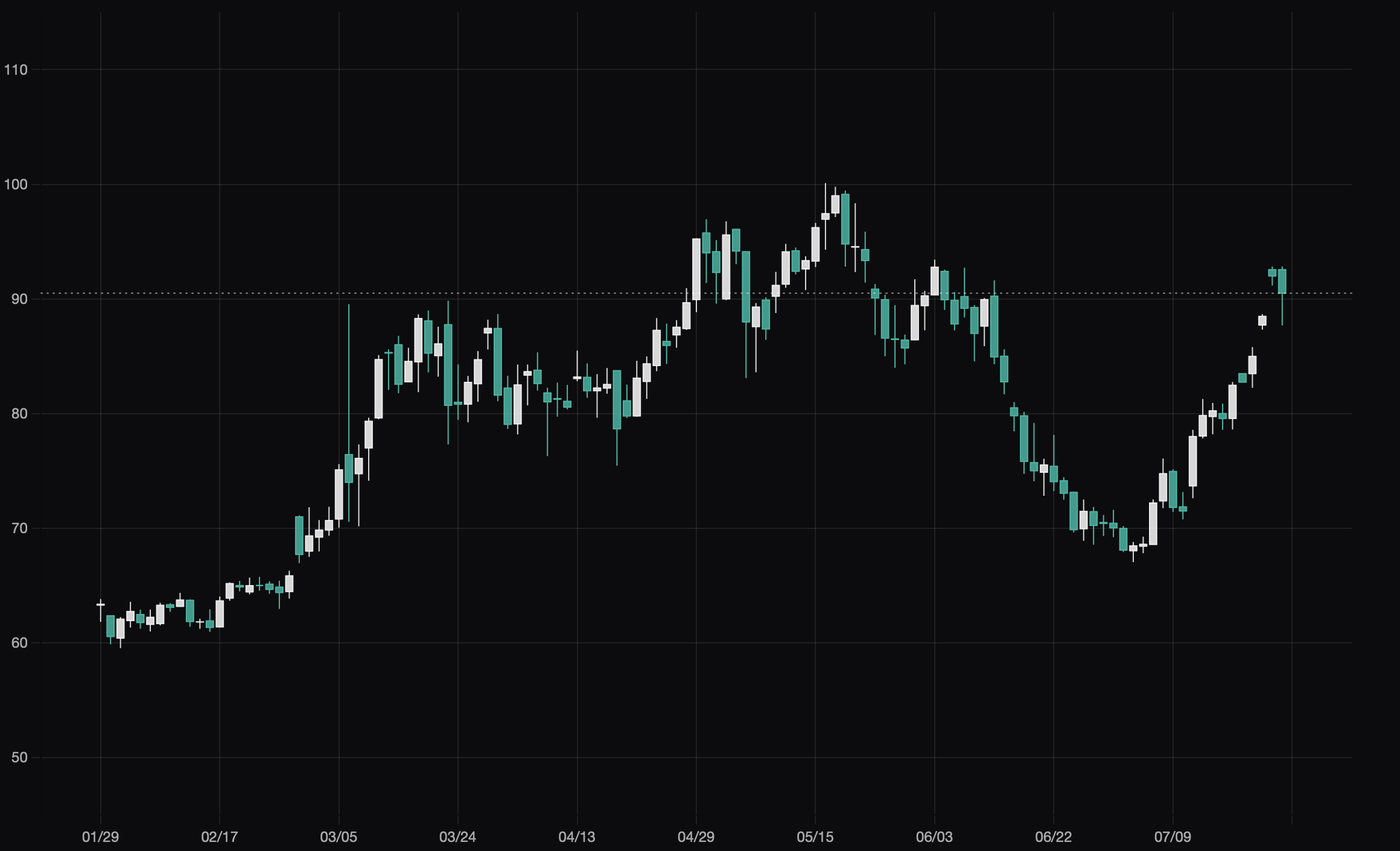
WTI Crude Oil (+12% on the week, chart below) led the tracked universe as consecutive nights of US strikes, Strait of Hormuz shipping disruptions, and a Houthi blockade drove crude from the low $80s toward the low $90s.
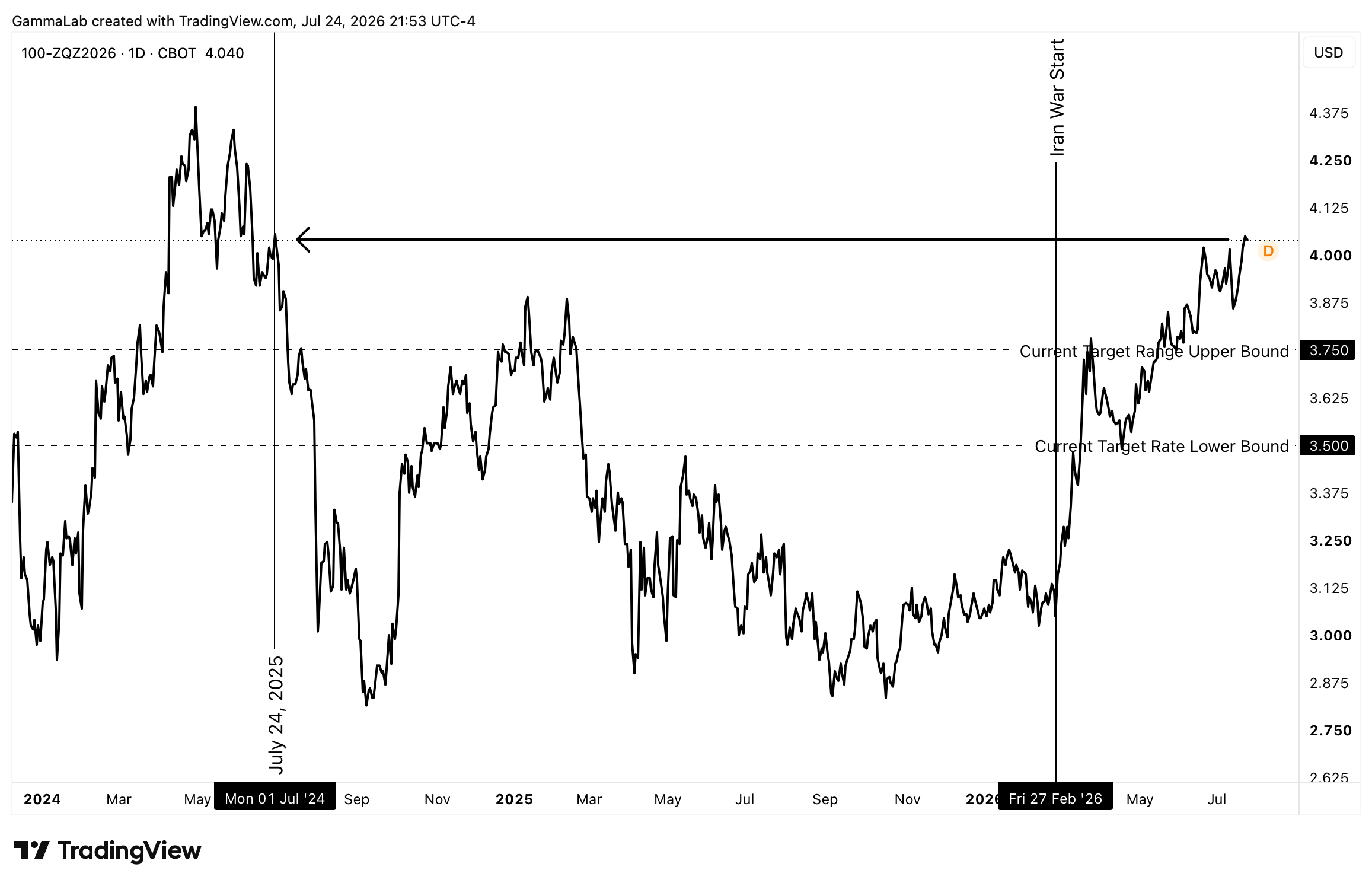
Economic data took a back seat to geopolitics. Monday's June Leading Economic Index printed at -0.2% against a 0.1% consensus, and Thursday's initial jobless claims came in at 187,000, well below the 214,000 estimate. The bigger macro shift was in rate expectations (see FF Dec contract below), with crude-driven inflation concerns, making a hike next month very plausible.
Monday
The S&P 500 fell 0.2% as an early semiconductor-led rally faded through the afternoon under rising oil prices and higher Treasury yields. The widening US-Iran war dominated, with US airstrikes hitting multiple Iranian sites and Iran striking US bases in Bahrain and Kuwait and a supertanker in the Strait of Hormuz. WTI settled up 1.1% at $82.59 while the 10-year yield rose six basis points to 4.60%. Micron rose 1.9% on the Kimi K3 memory-demand read-through, AMC surged 26.8% on record quarterly results, and CoreWeave signed $2.8 billion in new AI cloud contracts.
Tuesday
The S&P 500 rose 0.9%, closing near session highs as a powerful semiconductor rebound overwhelmed rising oil, surging yields, and an escalating conflict. The PHLX Semiconductor Index jumped 5.2%, with memory names Sandisk and Micron leading at roughly +14% and +12%, and Intel and AMD each up more than 8%. Copper (CPER) led the tracked universe on the day, up 2.9%. Overnight US intelligence flagged a prolonged standoff, closing the door on a quick resolution, and the White House confirmed a 50% tariff on broad Canadian goods effective August 20. WTI settled up 2.9% at $84.99, and 3M rose 7.3% and Hasbro gained 8.8% on beat-and-raise reports.
Wednesday
The S&P 500 finished essentially flat, slipping 0.1%, as investors held back ahead of Alphabet and Tesla earnings while a deepening conflict lifted energy and utilities and crushed software. WTI led the tracked universe, up 2.2%, as Strait transits collapsed from 29 to just 9 vessels on July 21 and Trump threatened infrastructure strikes for each ship attacked. Utilities surged 2.3% on AI power-demand optimism, while the software ETF fell 3% after Pegasystems missed and warned of delayed purchasing decisions. Super Micro surged nearly 20% on raised margin guidance and a record backlog above $60 billion, lifting Dell 9.3%. AMD added 1.5% on a partnership with Anthropic covering up to 2 gigawatts of GPUs alongside a $5 billion equity investment.
Thursday
The S&P 500 fell 1.2%, closing near session lows, as Alphabet's sharply higher capex guidance reignited AI spending fears and crowded out an otherwise strong earnings day. Oil jumped ~6% after Houthis struck two Saudi tankers and Trump weighed restarting major combat operations. Alphabet fell 6.9% after lifting FY26 capex guidance to $195-205 billion, and Tesla dropped 14.6% on a margin miss and a framing of 2026 as a massive capex year. Defense names surged, with Lockheed Martin up 10.5% on record backlog and RTX up 6.7%. Yields hit their highest since early 2025, with July Fed hike odds climbing to 35.8% from 11.8% a week earlier as initial jobless claims printed at 187,000.
Friday
The S&P 500 eked out a 0.1% gain, closing above 7,400, as strength in real estate, materials, and software nearly offset a sharp semiconductor selloff. The PHLX Semiconductor Index fell 4.4% after Intel raised its 2026 capex guidance above $20 billion and flagged higher outlays in 2027, sending the stock down nearly 8% despite a solid beat. Crude pulled back to $89.34 on reports of Pakistan-Iran peace exploration before that optimism faded late. Real estate led all sectors at +2.5%, anchored by Digital Realty's nearly 11% jump on a beat-and-raise, and materials rose 1.4% with Smurfit Westrock and International Paper each up over 11%. Trump imposed new Section 301 tariffs of 10% to 12.5% on most trading partners and launched a 301 investigation into EU fines against US tech firms.
Gamma Situation
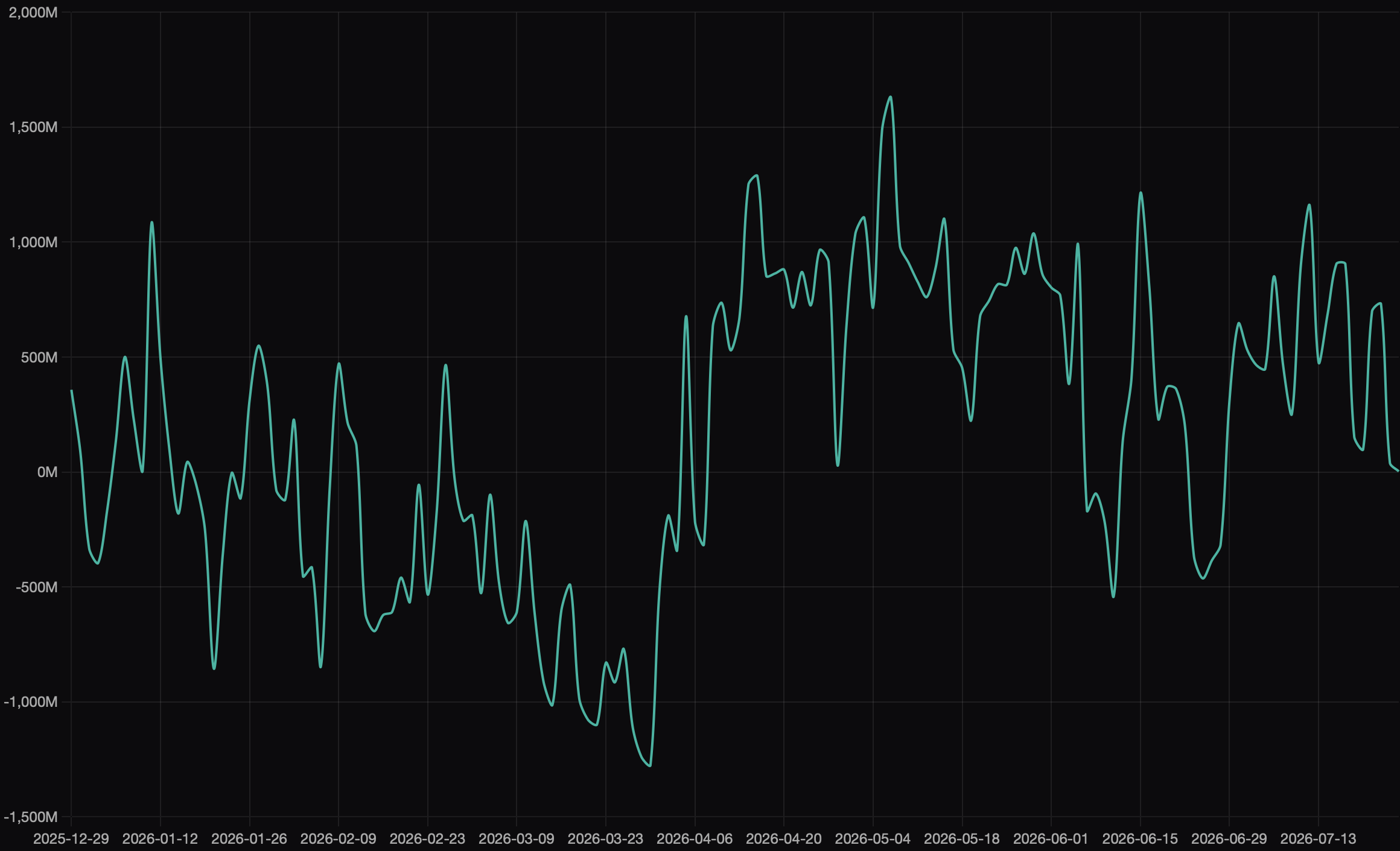
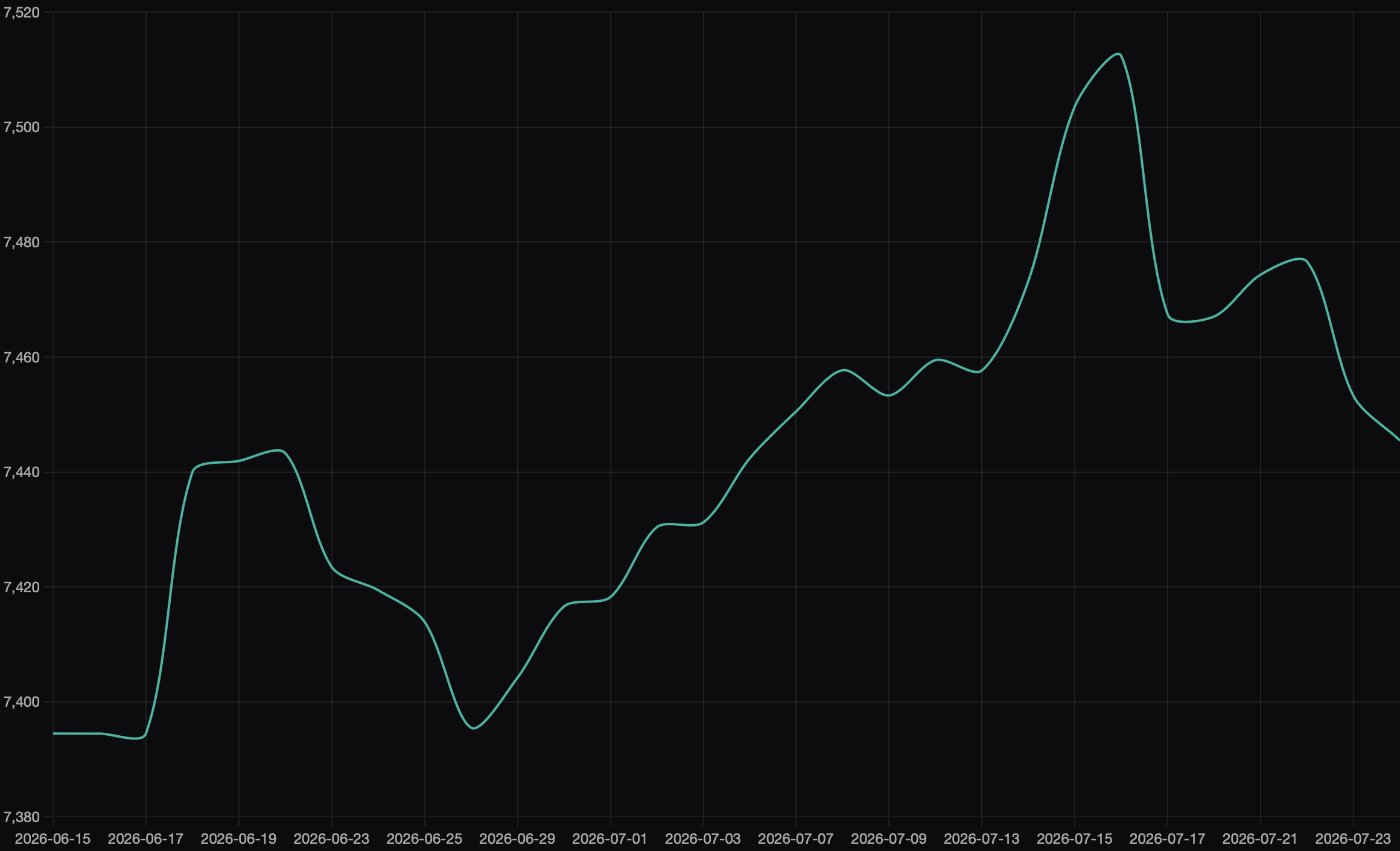
SPX gamma exposure (chart below) closed the week almost exactly at neutral, down from $99 mln at the start of the week, a -$96 mln swing as dealers shed length alongside the choppy, headline-driven tape. The gamma flip (2nd chart below) continued to contract, as traders cut back their bullish expression rapidly. The razor-thin gamma cushion points to a market with little dealer stabilization heading into next week's FOMC.
Systematic Situation
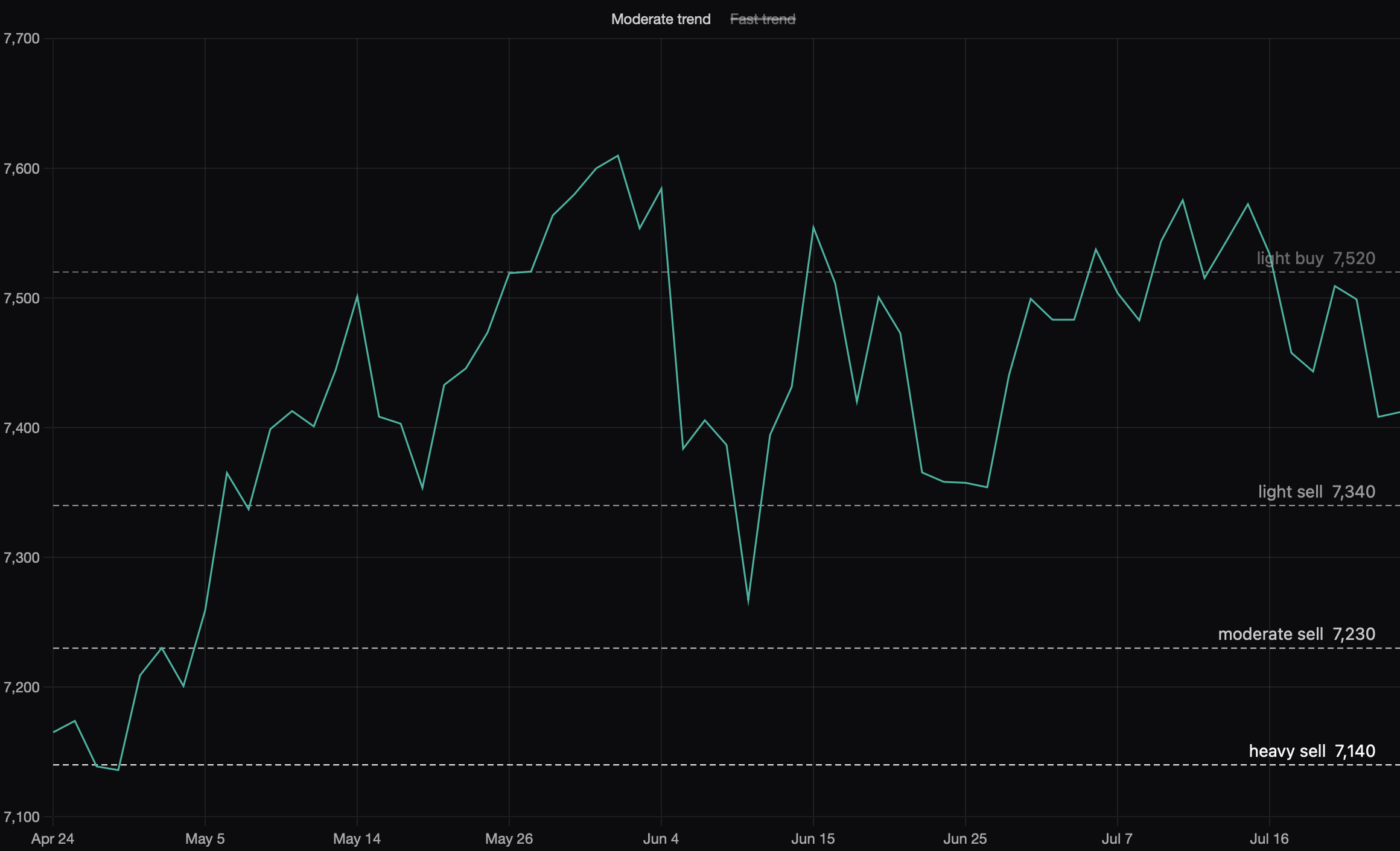
CTA equity exposure eased to +$55B as of Friday from +$60B the prior week, a $4B change that isn't material enough to be seriously discussed, but the first short-term trigger level (~7,340) is slowly moving into focus (chart below).
Earnings Season
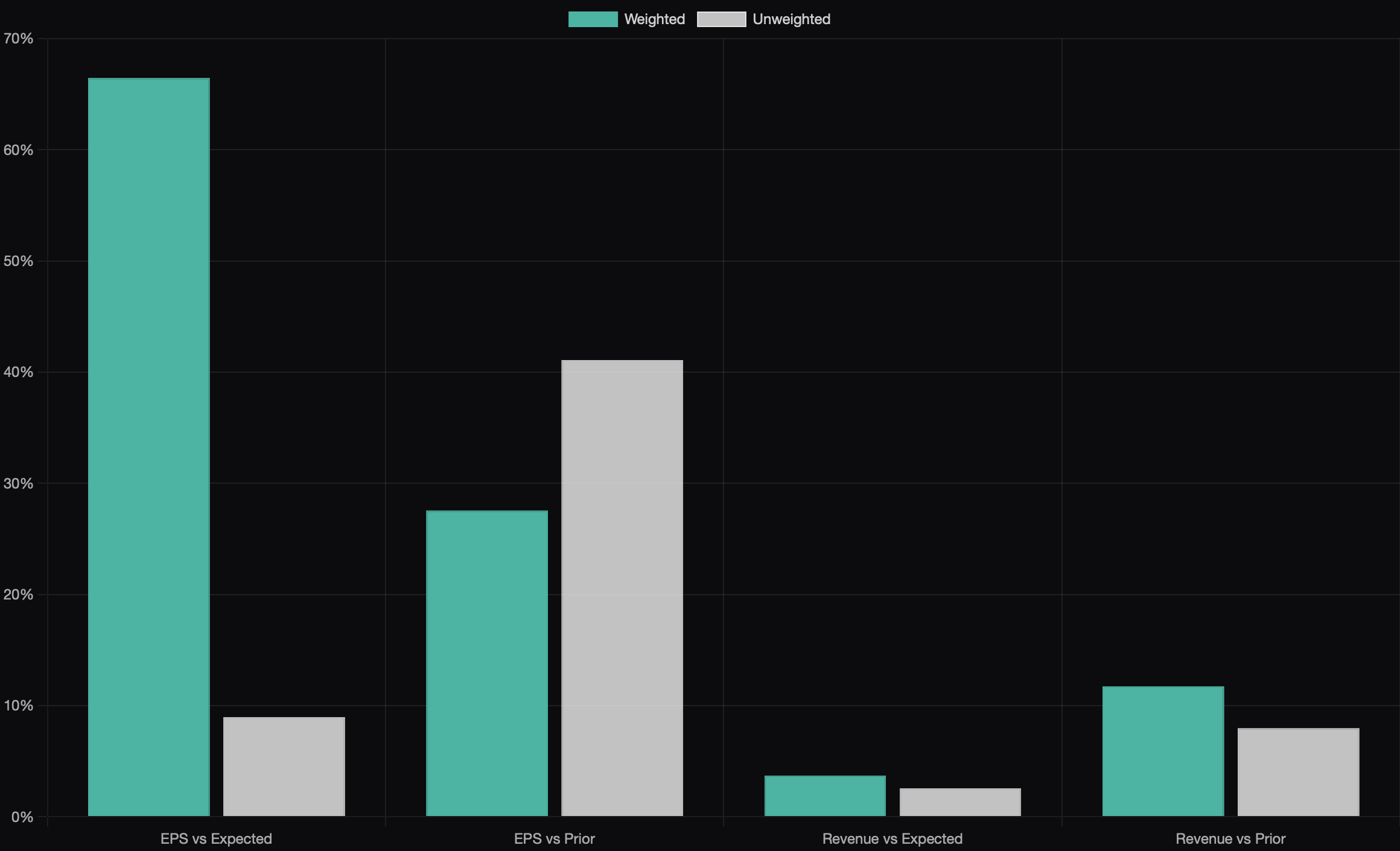
220 companies reported this week, bringing the quarter-to-date total to 288. Results have skewed positive, with EPS beating consensus by a market-cap-weighted 66.5% (up 9.0% unweighted) and revenue beating by a weighted 3.7% (up 2.6% unweighted).
Next week brings a massive 1442 scheduled reports, headlined by four Magnificent Seven names (Apple, Alphabet, Microsoft, Amazon, Meta, etc.) landing alongside the FOMC decision in the busiest week of the season.
This is a post from GammaLab — real-time market intelligence powered by AI. Log in or subscribe to access the full platform.